Staff Spotlight: Brandon Oliver
Aubry Vonck • March 4, 2021
The staff at the Coalition is second-to-none. This month, we invite you to get to know Senior Associate of Outreach Brandon Oliver.
Q: Where are you from originally?
Houston, Texas
Q: What do you love most about Houston?
The diversity in culture and how we always pull together in the most important times, especially after a disaster.
Q: What made you want to work in the area of homelessness? Can you tell us about your past experiences working in the homeless response system?
I’ve always had a heart for the homeless, my grandmother fed homeless clients downtown for years. She would make tacos and we would pass them out! This is was the beginning of something that I had no idea would eventually turn into a career. About six years ago, I had a friend who worked for Star of Hope and she had a brand new outreach position open. I applied and it was the best decision of my life.
Q: Can you tell me a little about your role at the Coalition and what it entails?
I’m a Senior Associate of outreach and we currently are focusing on the unincorporated areas of Harris County where there are limited social services that are being provided. We go out Monday through Friday to engage with clients. The hope is that during these interactions, we will build enough rapport with them to ultimately walk this journey with them until they are housed.
Q: Tell us about your experience during the winter freeze.
It was one of the most humbling experiences of my life! Seeing so many people in need, not all homeless, but mostly homeless all gathered in one place was surreal. I staffed the George R. Brown Center warming shelter along with the mayor’s office, Office of Emergency Management, and other social service agencies. I believe we were able to touch many lives during this time and prayerfully we will house some clients because of that week-long engagement!
Q: What is the most inspiring part of your job?
Being able to touch, reach and encourage people that there is more for them beyond the streets/shelters.
Q: Do you have any hobbies outside of work?
I sing!
Q: What makes you proud?
When I’m able to walk with someone through their homeless journey; the day they get their keys is always one of the proudest moments for me!
Q: If you were a superhero, what would your superpower be?
I kind of already feel like one at times because some of the obstacles that come up against us in outreach and our clients have obstacles that can seem impossible to overcome but we always find a way! If I did have a superpower, it would be the ability to make people happy no matter what they are facing. I’ve dealt with all kinds of abuse as a child but today I stand tall knowing there was and still is more for me. I would want to give them that ability to overcome through joy and peace.
Q: Tell us one fun fact about yourself!
I have a wife, two children, and two dogs. We all live together, along with my mother, under one roof!
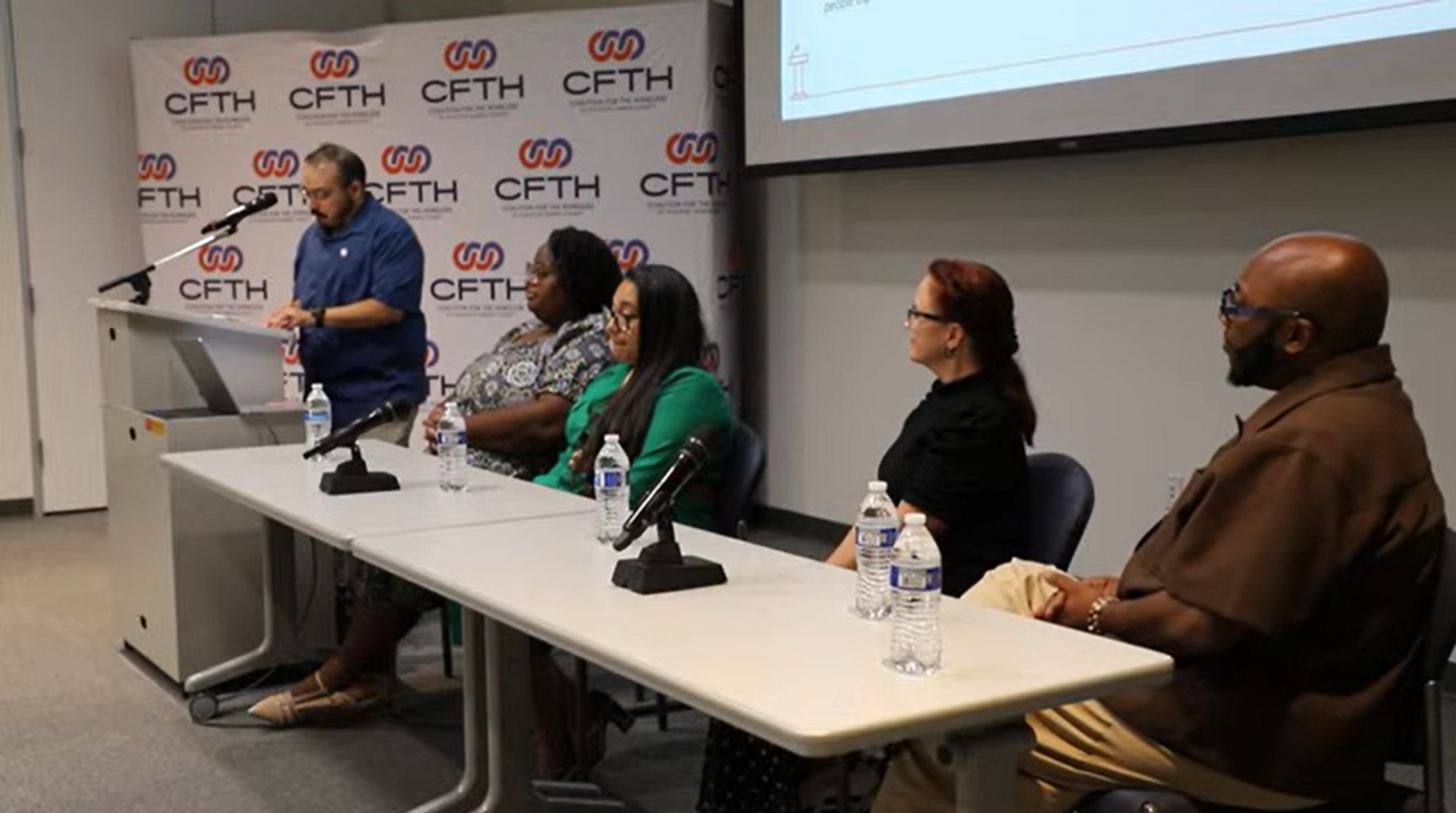
When someone experiences homelessness, the right solution is not always a long-term housing program. Sometimes a person needs help replacing an ID, reconnecting with family, finding an affordable shared home or overcoming another immediate barrier. That idea guided CFTH Presents: Building Better Pathways — Creating Faster Routes to Stability . The Coalition for the Homeless of Houston/Harris County (CFTH) hosted the discussion with leaders who oversee and carry out Rapid Resolutions across The Way Home, the Houston region’s homeless response system.

When most people think about homelessness, they picture someone sleeping outside or staying in a shelter. But homelessness often begins much earlier. A new survey from Rice University's Kinder Institute estimates that more than 140,000 adults across Harris, Fort Bend and Montgomery counties experienced temporary homelessness during the past year. Many of these individuals never slept outside. They stayed with friends or family because they had nowhere else to go, paid for motel rooms when they could, slept in their vehicles or found other temporary ways to get by. For those of us working in Houston's homeless response system, the estimate did not come as a surprise. What stands out is the scale. Our 2026 State of Homelessness report found that nearly 36,000 people interacted with The Way Home, Houston's regional homeless response system, during 2025. The Kinder estimate shows a much larger group of households struggling before they ever reach organizations like ours. Those numbers do not compete with one another. They tell the story of different points along the same continuum. By the time someone decides whether to enter a shelter or sleep outside, opportunities to prevent homelessness have often passed. The homeless response system helps people regain stability after they are in a shelter or on the street. Prevention happens months earlier, while people are still trying to hold on to their housing. Most people do not ask for help at the first sign of trouble. They work extra hours. They borrow money from family. They juggle bills. They hope next month's paycheck will solve this month's problem. Like most of us would, they try to solve the problem themselves. By the time they reach out, they often need far more help than they would have needed just a few months earlier. That is why Houston's prevention network is so important. Organizations like United Way of Greater Houston connect residents with rental assistance, utility assistance, benefits navigation and other resources that help stabilize households before they lose their housing. If you are struggling to keep up with rent, utilities or other essential expenses, do not wait until you have exhausted every option. Reaching out early gives providers more opportunities to help and gives families more options to stay housed. The Kinder research also reinforces another reality facing our region: We need more affordable housing. More than 140,000 adults experienced temporary homelessness in a single year because too many households live one unexpected expense away from losing their housing. That number points to a much larger population searching for homes they can afford long before they need homeless services. Houston's homeless response system continues to produce strong outcomes. More than 2,100 households moved into permanent housing during 2025, and 85% of those who exited homelessness two years ago remain housed today. At the same time, more than 7,100 people slept in shelters or on the street for the first time in 2025. Those numbers show that while our homeless response system continues to help thousands of people regain stability, new households continue to enter homelessness every day. The Kinder research gives Houston something we have not had before: a clearer picture of the households struggling before homelessness becomes visible. The Way Home will always play a critical role in helping people regain stability, but we also need to help more people before they ever need those services. That means strengthening prevention programs, expanding affordable housing and making it easier for people to ask for help early. Houston has repeatedly shown that when our community understands a challenge, it comes together to solve it. This research gives us a better understanding of where the next challenge begins.

Extreme Heat Is America's Deadliest Weather Hazard. Find Trusted Resources to Stay Safe and Help Others.