In the News - September/October Recap
Listen to a discussion on the best ways to approach homelessness in big cities and learn more about a new public art project coming to Houston. Check out our recent media mentions!
- The Denver Post | 09/03/2023 -
“Houston cut its homeless population by 63% in a decade. What can the new Denver mayor do in four years?”
“The Greater Houston area managed to do something no other major American metro did in the last decade when it reduced its homeless population by 63%.
“The Texas metro’s success since 2012 has made it a national model, so much so that delegations from other cities, including Denver, have traveled there. They’ve learned how Houston marshaled wide community buy-in and expansive resources to pull off such a feat.
“Now Denver city officials hope to follow important parts of Houston’s playbook as they pursue new Mayor Mike Johnston’s big campaign aspiration — a pledge to end street homelessness in the city in the next four years.”
Read the full story on The Denver Post.
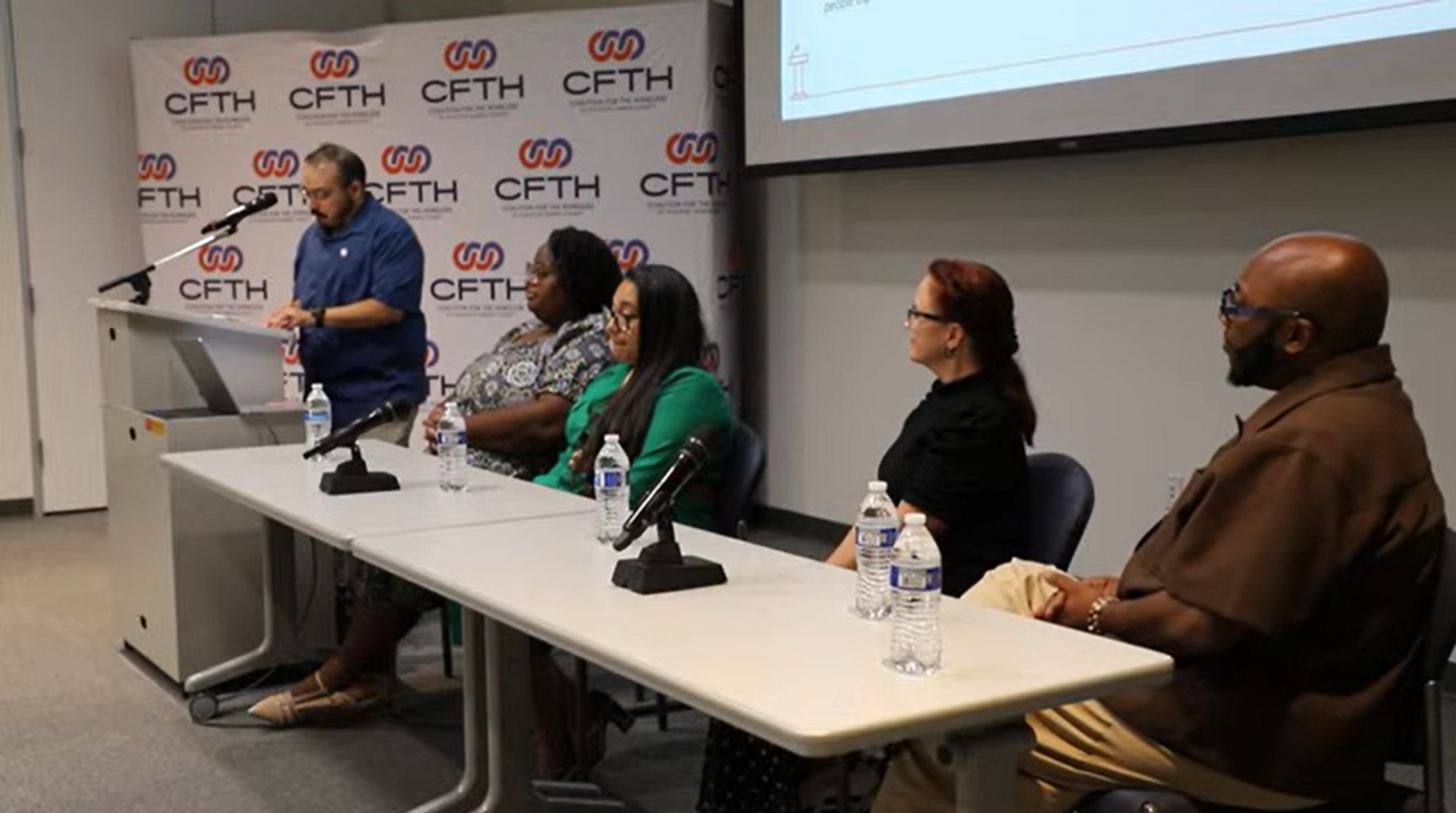
- Kinder Institute for Urban Research | 09/11/2023 - “Ending chronic homelessness remains a ‘moonshot’ opportunity for Houston”
“A number of public policy solutions could help Houston make further strides to reduce homelessness, but experts say what is truly needed is a recommitment from local leaders — and additional resources — to bring an end to chronic homelessness.
“That was among the themes that emerged from a town hall hosted by the Coalition for the Homeless of Houston/Harris County on Aug. 30 at the United Way of Greater Houston, part of a quarterly series of discussions on the issue.”
Read the full recap on the Kinder Institute for Urban Research.
- NTV America | 10/02/2023- “Homelessness and promising a path forward!”
CFTH President and CEO Mike Nichols goes on Truth Be Told hosted by Sofia Jamal to discuss Houston's approach to the issues of homelessness and extreme weather.
Watch the full interview on NTV America.

CFTH President & CEO Mike Nichols with Sofia Jamal from Truth Be Told - NTV America
- CultureMap Houston | 10/20/2023 - “Houston scores $1M grant from Bloomberg Philanthropies for Midtown public art project”
“Houston just scored a million-dollars win — for public art. Bloomberg Philanthropies set a challenge for cities to create temporary public art projects that address important civic issues in cities across the country, and Houston rose to that remarkable challenge with “HueMan: Shelter,” a public art program that will help enrich lives and change perspectives.
“The million-dollar, innovative project will support art-making through collaborations between artists and unsheltered individuals while producing new public art for all Houstonians.”
Read the article on CultureMap Houston.
- The Columbian | 10/23/2023- “‘Homelessness is actually a community choice’: Council for Homeless event touts impactful strategies”
“'Homelessness is actually a community choice,’ said Council for the Homeless Executive Director Sesany Fennie-Jones. “The good news is that together, we get to choose to create a community that’s free of homelessness.”
“On Thursday, Council for the Homeless held “Gathering for Change: Solving Homelessness Together.” The fundraiser was intended to spark community change by providing examples of solutions to ending homelessness.
“This year, the council invited Marc Eichenbaum to speak and share the successes Houston has had alleviating homelessness through affordable housing investments. Eichenbaum is the special assistant to the mayor for homeless initiatives in Houston.”
Read the full article on The Columbian.
- NY1 Spectrum News | 10/24/2023 - “The city might need a new approach to housing the homeless”
“Are there better ways to house people experiencing homelessness in New York? Elected officials have not reached a consensus on the best way to approach this issue, and the city shelter system has been further stressed recently with the arrival of thousands of migrants. So host Pat Kiernan analyzed Houston, which has moved 25,000 people into housing in the past decade. He also speaks with the CEO of a nonprofit to learn lessons that could be applied to New York.”
Listen to the full podcast on NY1 Spectrum News.