Coalition Staff Shares Its Thoughts on National Conference
Communications Admin • August 9, 2018
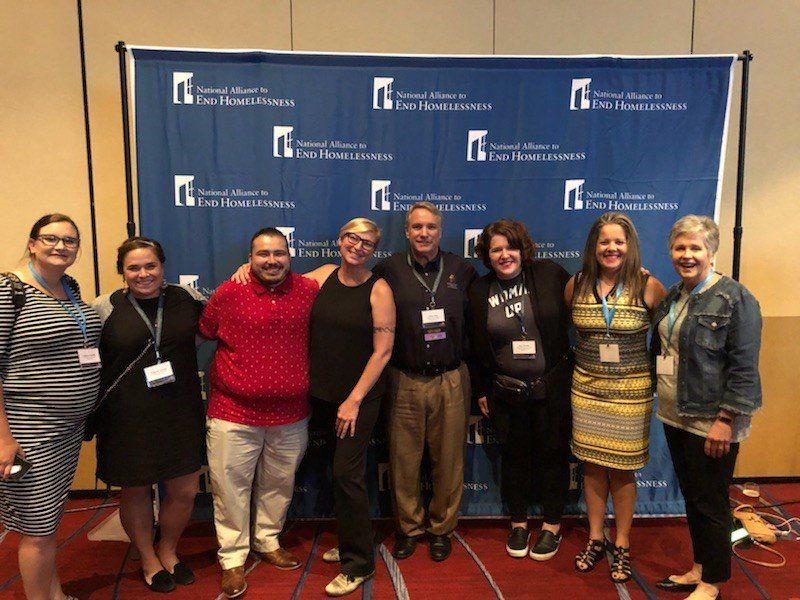
The National Alliance to End Homelessness(NAEH) held its annual National Conference on Ending Homelessness in Washington, D.C. this July. Those attending the conference include funders, researchers, homeless advocates, state and local government leaders, and members of our very own Coalition staff. The conference hosts a variety of workshops where attendees can make their own agenda based on their interests, from learning best practices to sharing ideas and creating valuable relationships with new contacts. Attendees also had the opportunity to meet with policymakers on the last day of the conference, known as Capitol Hill Day.
When asked about their own personal experiences at the conference, this is what members of our staff had to say:
“I thought Capitol Hill Day was a huge success. It was great getting to meet Beto O’Rourke. Cory Booker was a lively and inspirational speaker during the plenary. I really liked the session that discussed upcoming changes to the LSA[Longitudinal System Analysis] which will be the new reporting tool replacing the AHAR[Annual Homelessness Assessment Report].”
– Ana Rausch, Senior Research Project Manager
“It was a great week of learning more about the thought process behind some changes HUD [U.S. Department of Housing and Urban Development] is implementing. It’s always an enlightening experience, mostly seeing where we are compared to other communities in the nation. Most notably, it’s always an intriguing session during the NOFA (Notice of Funding Availability) season where we hear firsthand the intention behind some of the changes implemented. I was interested in learning more about the Joint TH-PH/RRH Program Component, and the panel discussing the challenges and benefits to this program was certainly thought provoking on ways we could implement a similar program for our own CoC.”
– Concetta Scerbo, Project Manager
“I enjoyed the audience feedback during the sessions in which I presented and was honored to have been asked to be part of a lunch plenary panel on family RRH [Rapid Re-housing]. The day after the conference, I welcomed the opportunity to delve deeper into the topic of racial equity in our system planning process during the A Way Home America(national initiative to prevent and end youth homelessness) Steering Committee day-long meeting.”
– Eva Thibaudeau, Vice President of Programs
“I had a great dinner with Connections Project Team and Heartland Alliance. I was able to present with Eva in a lively, well-attended session on collaborating with the public workforce. I also thought we had a Fantastic Capitol Hill Day with three face-to-face visits including U.S. Representatives Al Green and Pete Olson, and U.S. Representative and 2018 Senate Candidate, Beto O’Rourke.”
– Gary Grier, Senior Project Manager
“I had some great conversations with providers about what their RRH programs are like and how they structure them. I also had the opportunity to meet Beto O’Rourke, which was an awesome experience for me. After hearing about how providers [across the U.S.] struggle with their housing authorities, it reminded me how lucky we are to have a housing authority that is so bought into our homeless system. On the other hand, I heard from a few communities that are excelling in areas where we are struggling- like with increasing income, shared housing, collaboration with other mainstream services, and that gave me valuable insight.”
– James Gonzalez, Project Manager
“The Conference provided a diversity of choices in their workshops for “best practices” that gave me a lot of invaluable information and great contacts for resources for the work I am doing as a Regional Project Manager. One of my personal highlights was hearing Cory Booker speak these challenging words: “Ending homelessness is not some crazy dream. We have the tools and capacity to end homelessness in America. It’s not a matter of can we. It’s a matter of do we have the collective will.”
– Nancy Heintz, Project Manager for Montgomery County
“The 2018 National Conference on Ending Homelessness in Washington, DC was only my second NAEH conference. I continue to be impressed with the conference, both in the number and variety of sessions and workshops that are offered and its ability to bring together people from all over the United States – and the world! – who are all working toward the same goal: ending homelessness. It’s inspiring to know that there are so many of us out there, and so beneficial to be able to learn from one another. I was also delighted to be able to participate in Capitol Hill Day activities. Our face-to-face meeting with Representative Beto O’Rourke was amazing. As someone who is personally very politically active, the ability to communicate directly with elected representatives about The Way Home’s successes and how they can ensure that our valuable work continues was incredibly powerful.”
– Sara Brown, Senior Manager of External Affairs and Special Projects
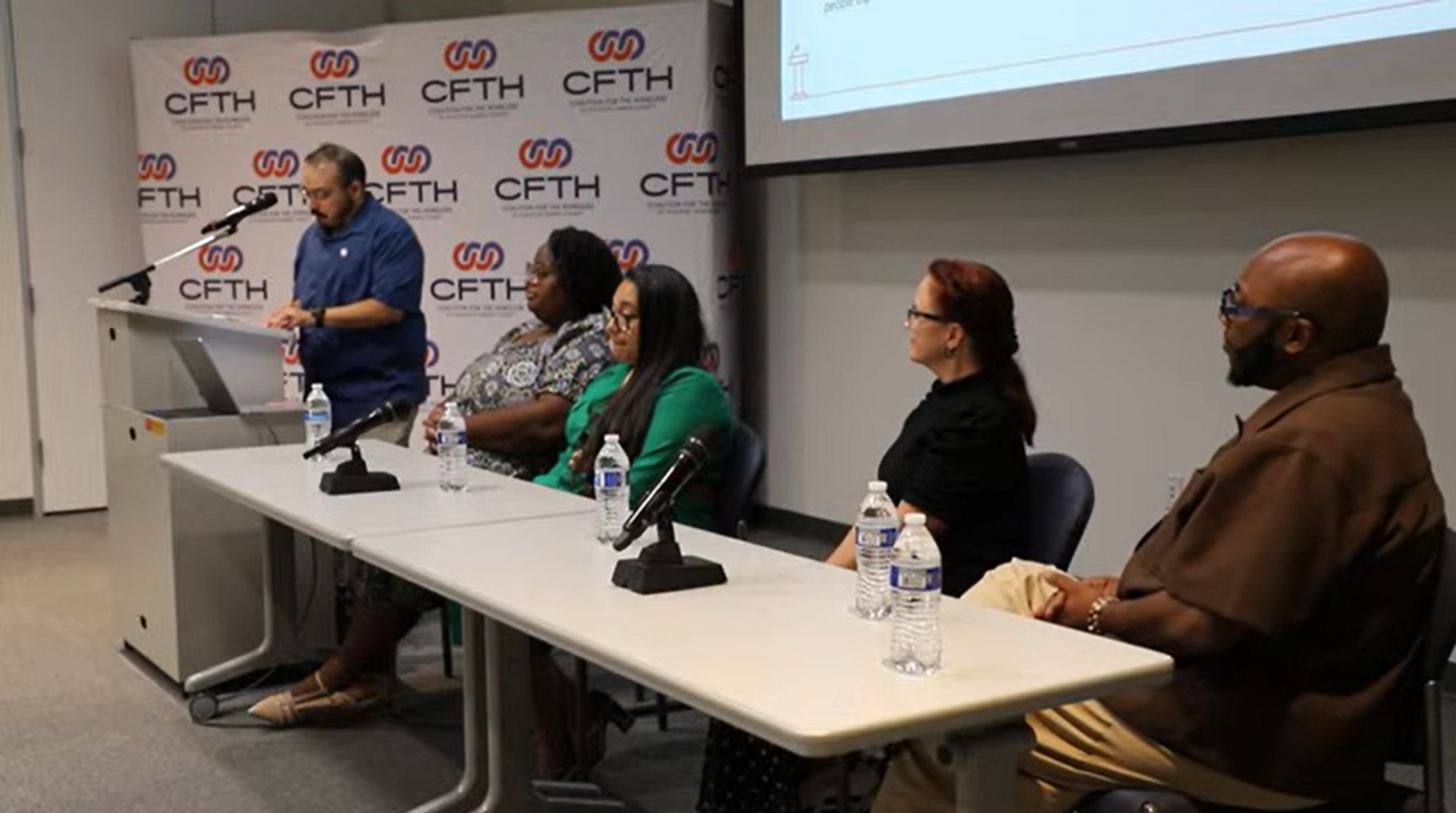
When someone experiences homelessness, the right solution is not always a long-term housing program. Sometimes a person needs help replacing an ID, reconnecting with family, finding an affordable shared home or overcoming another immediate barrier. That idea guided CFTH Presents: Building Better Pathways — Creating Faster Routes to Stability . The Coalition for the Homeless of Houston/Harris County (CFTH) hosted the discussion with leaders who oversee and carry out Rapid Resolutions across The Way Home, the Houston region’s homeless response system.

When most people think about homelessness, they picture someone sleeping outside or staying in a shelter. But homelessness often begins much earlier. A new survey from Rice University's Kinder Institute estimates that more than 140,000 adults across Harris, Fort Bend and Montgomery counties experienced temporary homelessness during the past year. Many of these individuals never slept outside. They stayed with friends or family because they had nowhere else to go, paid for motel rooms when they could, slept in their vehicles or found other temporary ways to get by. For those of us working in Houston's homeless response system, the estimate did not come as a surprise. What stands out is the scale. Our 2026 State of Homelessness report found that nearly 36,000 people interacted with The Way Home, Houston's regional homeless response system, during 2025. The Kinder estimate shows a much larger group of households struggling before they ever reach organizations like ours. Those numbers do not compete with one another. They tell the story of different points along the same continuum. By the time someone decides whether to enter a shelter or sleep outside, opportunities to prevent homelessness have often passed. The homeless response system helps people regain stability after they are in a shelter or on the street. Prevention happens months earlier, while people are still trying to hold on to their housing. Most people do not ask for help at the first sign of trouble. They work extra hours. They borrow money from family. They juggle bills. They hope next month's paycheck will solve this month's problem. Like most of us would, they try to solve the problem themselves. By the time they reach out, they often need far more help than they would have needed just a few months earlier. That is why Houston's prevention network is so important. Organizations like United Way of Greater Houston connect residents with rental assistance, utility assistance, benefits navigation and other resources that help stabilize households before they lose their housing. If you are struggling to keep up with rent, utilities or other essential expenses, do not wait until you have exhausted every option. Reaching out early gives providers more opportunities to help and gives families more options to stay housed. The Kinder research also reinforces another reality facing our region: We need more affordable housing. More than 140,000 adults experienced temporary homelessness in a single year because too many households live one unexpected expense away from losing their housing. That number points to a much larger population searching for homes they can afford long before they need homeless services. Houston's homeless response system continues to produce strong outcomes. More than 2,100 households moved into permanent housing during 2025, and 85% of those who exited homelessness two years ago remain housed today. At the same time, more than 7,100 people slept in shelters or on the street for the first time in 2025. Those numbers show that while our homeless response system continues to help thousands of people regain stability, new households continue to enter homelessness every day. The Kinder research gives Houston something we have not had before: a clearer picture of the households struggling before homelessness becomes visible. The Way Home will always play a critical role in helping people regain stability, but we also need to help more people before they ever need those services. That means strengthening prevention programs, expanding affordable housing and making it easier for people to ask for help early. Houston has repeatedly shown that when our community understands a challenge, it comes together to solve it. This research gives us a better understanding of where the next challenge begins.

Extreme Heat Is America's Deadliest Weather Hazard. Find Trusted Resources to Stay Safe and Help Others.